VACUUM is a set of normative guidance principles for achieving training and test dataset quality for structured datasets in data science and machine learning. The garbage-in, garbage out principle motivates a solution to the problem of data quality but does not offer a specific solution. Unlike the majority of the ad-hoc data quality assessment metrics often used by practitioners VACUUM specifies qualitative principles for data quality management and serves as a basis for defining more detailed quantitative metrics of data quality. VACUUM is an acronym that stands for: valid accurate consistent uniform unified model
Imix video cube
The Imix (also known as ImMix) Video Cube is one of the first computer non-linear editing systems that was a full broadcast quality online video finishing machine. After its release in 1994, Imix released a more advanced version, the Imix Turbo Cube, which boasted 4 channels of real time layered visual effects. It was a hardware computer system controlled by an Apple Macintosh computer.
Lai–Robbins lower bound
The Lai–Robbins lower bound gives an asymptotic lower bound on the regret that any uniformly good algorithm must incur in the stochastic multi-armed bandit problem. The original result was proved by Tze Leung Lai and Herbert Robbins in 1985 for parametric exponential families. Later work extended the statement to more general classes of distributions. == Multi-armed bandit problem == The multi-armed bandit problem (MAB) is a sequential game in which the player must trade off exploration (to learn) and exploitation (to earn). The player chooses among K {\displaystyle K} actions (arms) with unknown distributions ν = ( ν 1 , … , ν K ) {\displaystyle \nu =(\nu _{1},\dots ,\nu _{K})} . The player is assumed to know a class of distributions D {\displaystyle {\mathcal {D}}} such that for every k {\displaystyle k} one has ν k ∈ D {\displaystyle \nu _{k}\in {\mathcal {D}}} (for example, D {\displaystyle {\mathcal {D}}} may be the family of Gaussian or Bernoulli distributions). At each round t = 1 , … , T {\displaystyle t=1,\dots ,T} the player selects (pulls) an arm a t {\displaystyle a_{t}} and observes a reward X t ∼ ν a t {\displaystyle X_{t}\sim \nu _{a_{t}}} . We denote N a ( t ) := ∑ s = 1 t 1 { a s = a } {\displaystyle N_{a}(t):=\sum _{s=1}^{t}\mathbf {1} _{\{a_{s}=a\}}} the number of times arm a {\displaystyle a} has been pulled in the first t {\displaystyle t} rounds, μ ( ν ) := ( μ 1 , … , μ K ) {\displaystyle \mu (\nu ):=(\mu _{1},\dots ,\mu _{K})} the vector of arm means, where μ k = E X ∼ ν k [ X ] {\displaystyle \mu _{k}=\mathbb {E} _{X\sim \nu _{k}}[X]} , μ ∗ := max a μ a {\displaystyle \mu ^{}:=\max _{a}\mu _{a}} the highest mean Δ a := μ ∗ − μ a ≥ 0 {\displaystyle \Delta _{a}:=\mu ^{}-\mu _{a}\geq 0} the gap of arm a {\displaystyle a} . An arm a {\displaystyle a} with μ a = μ ∗ {\displaystyle \mu _{a}=\mu ^{}} is called an optimal arm; otherwise it is a suboptimal arm. The goal is to minimize the regret at horizon T {\displaystyle T} , defined by R T := ∑ a = 1 K Δ a E [ N a ( T ) ] . {\displaystyle R_{T}:=\sum _{a=1}^{K}\Delta _{a}\,\mathbb {E} [N_{a}(T)].} Intuitively, the regret is the (expected) total loss compared to always playing an optimal arm: regret = ∑ a ( cost of playing a ) × ( times a is played ) . {\displaystyle {\text{regret}}=\sum _{a}\ ({\text{cost of playing }}a)\times ({\text{times }}a{\text{ is played}}).} An MAB algorithm is a (possibly randomized) policy that, at each round t {\displaystyle t} , choose an arm a_t by using the observations received from previous turns. === Intuitive example === Suppose a farmer must choose, each year, one of K {\displaystyle K} seed varieties to plant. Each variety k {\displaystyle k} has an unknown average yield μ k {\displaystyle \mu _{k}} . If the farmer knew the best variety (with mean μ ∗ {\displaystyle \mu ^{}} ) he would plant it every year; in reality he must try varieties to learn which is best. The cumulative regret after T {\displaystyle T} years measures the total expected loss in yield due to imperfect knowledge. Remarks The model above is the stochastic MAB; there also exist adversarial variants. One may consider a fixed-horizon setting (known T {\displaystyle T} ) or an anytime setting (unknown T {\displaystyle T} ). == Lai–Robbins lower bound == The theorem gives the right amount of time we should pull a suboptimal arm k {\displaystyle k} to distinguish whether we are in the instance with ν k {\displaystyle \nu _{k}} or with ν ~ k {\displaystyle {\tilde {\nu }}_{k}} where ν ~ k {\displaystyle {\tilde {\nu }}_{k}} is such that μ ~ k > μ ∗ {\displaystyle {\tilde {\mu }}_{k}>\mu ^{}} . Knowning a lower bound on the number of pull of every suboptimal arm gives a lower bound on the regret as only suboptimal arms contribute to the regret. Before stating the formal theorem we need to define what is a consistent algorithm. === Consistency (uniformly good algorithms) === Let D {\displaystyle {\mathcal {D}}} be a class of probability distributions and consider K {\displaystyle K} arms with reward distributions ν = ( ν 1 , … , ν K ) ∈ D K {\displaystyle \nu =(\nu _{1},\dots ,\nu _{K})\in {\mathcal {D}}^{K}} . An algorithm is said to be consistent (also called uniformly good) on D K {\displaystyle {\mathcal {D}}^{K}} if, for every instance ν ∈ D K {\displaystyle \nu \in {\mathcal {D}}^{K}} , the expected regret R T ( ν ) {\displaystyle R_{T}(\nu )} grows subpolynomially: ∀ α > 0 , R T ( ν ) = o ( T α ) as T → ∞ {\displaystyle \forall \alpha >0,\qquad R_{T}(\nu )=o(T^{\alpha })\quad {\text{as }}T\to \infty } This assumption excludes algorithms that perform well on some instances but incur linear regret on others. === Formal lower bound === For any suboptimal arm a {\displaystyle a} . For a distribution ν a ∈ D {\displaystyle \nu _{a}\in {\mathcal {D}}} and a threshold x {\displaystyle x} , define K inf ( ν a , x , D ) := inf { KL ( ν a , ν ′ ) : ν ′ ∈ D , μ ′ > x } {\displaystyle {\mathcal {K}}_{\inf }(\nu _{a},x,{\mathcal {D}}):=\inf {\Bigl \{}\operatorname {KL} (\nu _{a},\nu '):\nu '\in {\mathcal {D}},\ \mu '>x{\Bigr \}}} where KL ( ⋅ , ⋅ ) {\displaystyle \operatorname {KL} (\cdot ,\cdot )} denotes the Kullback-Leibler divergence. Then, for any algorithm consistent on D K {\displaystyle {\mathcal {D}}^{K}} and for every instance ν ∈ D K {\displaystyle \nu \in {\mathcal {D}}^{K}} , every suboptimal arm a {\displaystyle a} satisfies E ν [ N a ( T ) ] ≥ ln T K inf ( ν a , μ ∗ , D ) + o ( ln T ) {\displaystyle \mathbb {E} _{\nu }[N_{a}(T)]\geq {\frac {\ln T}{{\mathcal {K}}_{\inf }(\nu _{a},\mu ^{},{\mathcal {D}})}}+o(\ln T)} Consequently, the regret satisfies R T ( ν ) ≥ ( ∑ a : μ a < μ ∗ Δ a K inf ( ν a , μ ∗ , D ) ) ln T + o ( ln T ) {\displaystyle R_{T}(\nu )\geq \left(\sum _{a:\,\mu _{a}<\mu ^{}}{\frac {\Delta _{a}}{{\mathcal {K}}_{\inf }(\nu _{a},\mu ^{},{\mathcal {D}})}}\right)\ln T+o(\ln T)} The original 1985 paper established this result for exponential families; later work showed that the bound holds under much weaker assumptions on D {\displaystyle {\mathcal {D}}} . === Intuition === Consistency imposes that, for every ν {\displaystyle \nu } , the number of pulls of an optimal arm must be large. This means that μ ∗ {\displaystyle \mu ^{}} is estimated very accurately. The goal is to determine, for a suboptimal arm k {\displaystyle k} , how many samples are needed to be confident, with the appropriate level of confidence, that μ k < μ ∗ {\displaystyle \mu _{k}<\mu ^{}} . To do so, we use what is called the most confusing instance: an instance close to ν {\displaystyle \nu } such that arm k {\displaystyle k} is optimal. We define it as ν ~ {\displaystyle {\tilde {\nu }}} such that, for all a ≠ k {\displaystyle a\neq k} , ν ~ a = ν a {\displaystyle {\tilde {\nu }}_{a}=\nu _{a}} , and ν ~ k {\displaystyle {\tilde {\nu }}_{k}} is chosen so that μ ~ k > μ ∗ {\displaystyle {\tilde {\mu }}_{k}>\mu ^{}} . The objective is to determine how many samples of arm k {\displaystyle k} are required to distinguish whether we are in the instance with ν k {\displaystyle \nu _{k}} or with ν ~ k {\displaystyle {\tilde {\nu }}_{k}} in terms of KL {\displaystyle \operatorname {KL} } distance. == Algorithms achieving the Lai–Robbins lower bound == Several algorithms are known to achieve the Lai–Robbins asymptotic lower bound under specific assumptions on the reward distribution class D {\displaystyle {\mathcal {D}}} . The following list summarizes a non-exhaustive list of algorithms matching the lower bound. == Extension to other problems == === Structured bandit === A more complexe is structured bandit where we know that the mean of each arm is in a set with some restriction. In this case we can prove a smaller lower bound that use the knowledge of this set. === Best arm identification (BAI) === A similar result has been proved for best arm identification, which is the same game except that, instead of minimizing the regret, the goal is to identify the best arm with probability 1 − δ {\displaystyle 1-\delta } using as few rounds as possible. === Reinforcement Learning (RL) === Similar results have been proved for regret minimization in average-reward reinforcement learning. The order is also ln T {\displaystyle \ln T} , with a constant that depends on the problem.
Transaction data
Transaction data or transaction information is a category of data describing transactions. Transaction data/information gather variables generally referring to reference data or master data – e.g. dates, times, time zones, currencies. Typical transactions are: Financial transactions about orders, invoices, payments; Work transactions about plans, activity records; Logistic transactions about deliveries, storage records, travel records, etc.. == Management == Recording and storing transactions is called records management. The record of the transaction is stored in a place where the retention can be guaranteed and where data is archived or removed following a retention period. Formats of recorded transactions can be digital data in databases and spreadsheets, or handwritten texts in physical documents like former bankbooks. Transaction processing systems are application software that generate transactions and manage transaction data/information, e.g. SAP and Oracle Financials. == Data warehousing == Transaction data can be summarised in a data warehouse, which helps accessibility and analysis of the data.
Artificial imagination
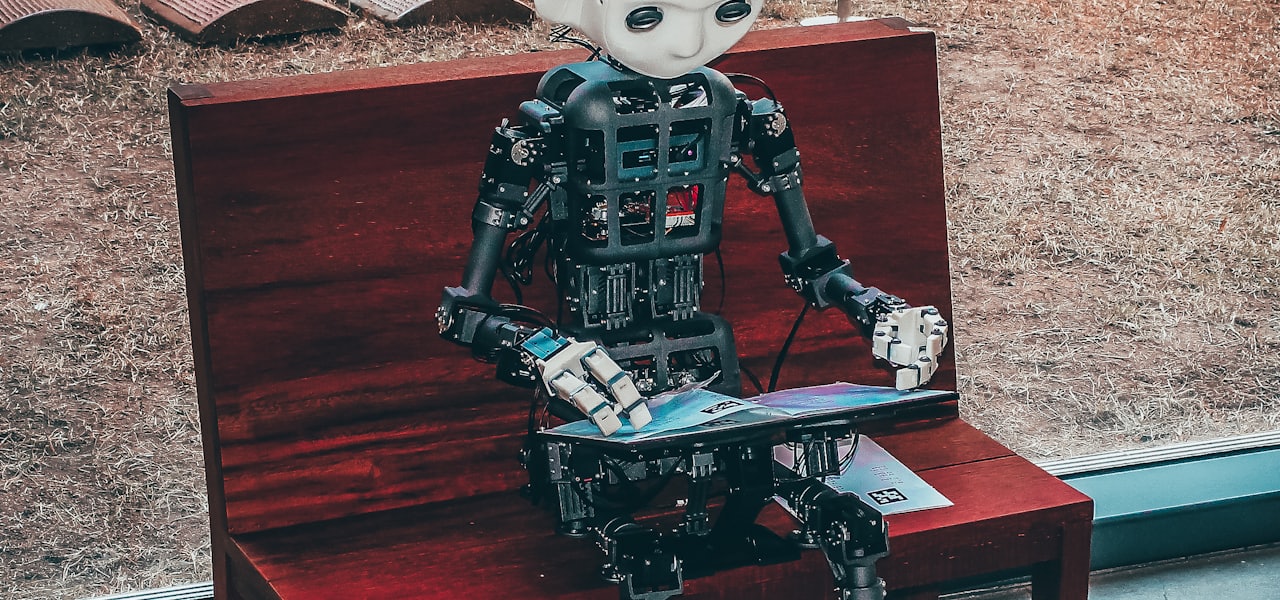
Artificial imagination is a narrow subcomponent of artificial general intelligence which generates, simulates, and facilitates real or possible fiction models to create predictions, inventions, or conscious experiences. The term artificial imagination is also used to describe a property of machines or programs. Some of the traits that researchers hope to simulate include creativity, vision, digital art, humor, and satire. Practitioners in the field are researching various aspects of Artificial imagination, such as Artificial (visual) imagination, Artificial (aural) Imagination, modeling/filtering content based on human emotions and Interactive Search. Some articles on the topic speculate on how artificial imagination may evolve to create an artificial world "people may be comfortable enough to escape from the real world". Some researchers such as G. Schleis and M. Rizki have focused on using artificial neural networks to simulate artificial imagination. Another important project is being led by Hiroharu Kato and Tatsuya Harada at the University of Tokyo in Japan. They have developed a computer capable of translating a description of an object into an image, which could be the easiest way to define what imagination is. Their idea is based on the concept of an image as a series of pixels divided into short sequences that correspond to a specific part of an image. The scientists call this sequences "visual words" and those can be interpreted by the machine using statistical distribution to read an create an image of an object the machine has not encountered. The topic of artificial imagination has garnered interest from scholars outside the computer science domain, such as noted communications scholar Ernest Bormann, who came up with the Symbolic Convergence Theory and worked on a project to develop artificial imagination in computer systems. An interdisciplinary research seminar organized by the artist Grégory Chatonsky on artificial imagination and postdigital art has taken place since 2017 at the Ecole Normale Supérieure in Paris. == Use in interactive search == The typical application of artificial imagination is for an interactive search. Interactive searching has been developed since the mid-1990s, accompanied by the World Wide Web's development and the optimization of search engines. Based on the first query and feedback from a user, the databases to be searched are reorganized to improve the searching results. Artificial imagination allows us to synthesize images and to develop a new image, whether it is in the database, regardless its existence in the real world. For example, the computer shows results that are based on the answer from the initial query. The user selects several relevant images, and then the technology analyzes these selections and reorganizes the images' ranks to fit the query. In this process, artificial imagination is used to synthesize the selected images and to improve the searching result with additional relevant synthesized images. This technique is based on several algorithms, including the Rocchio algorithm and the evolutionary algorithm. The Rocchio algorithm, locating a query point near relevant examples and far away from irrelevant examples, is simple and works well in a small system where the databases are arranged in certain ranks. The evolutionary synthesis is composed of two steps: a standard algorithm and an enhancement of the standard algorithm. Through feedback from the user, there would be additional images synthesized so as to be suited to what the user is looking for. == General artificial imagination == Artificial imagination has a more general definition and wide applications. The traditional fields of artificial imagination include visual imagination and aural imagination. More generally, all the actions to form ideas, images and concepts can be linked to imagination. Thus, artificial imagination means more than only generating graphs. For example, moral imagination is an important research subfield of artificial imagination, although classification of artificial imagination is difficult. Morals are an important part to human beings' logic, while artificial morals are important in artificial imagination and artificial intelligence. A common criticism of artificial intelligence is whether human beings should take responsibility for machines' mistakes or decisions and how to develop well-behaved machines. As nobody can give a clear description of the best moral rules, it is impossible to create machines with commonly accepted moral rules. However, recent research about artificial morals circumvent the definition of moral. Instead, machine learning methods are applied to train machines to imitate human morals. As the data about moral decisions from thousands of different people are considered, the trained moral model can reflect widely accepted rules. Memory is another major field of artificial imagination. Researchers such as Aude Oliva have performed extensive work on artificial memory, especially visual memory. Compared to visual imagination, the visual memory focuses more on how machine understand, analyse and store pictures in a human way. In addition, characters like spatial features are also considered. As this field is based on the brains' biological structures, extensive research on neuroscience has also been performed, which makes it a large intersection between biology and computer science.
Sycophancy (artificial intelligence)
In the field of artificial intelligence, sycophancy is a tendency of large language models (LLMs) and other AI assistants to tailor their responses to what they predict the user wants to hear rather than to what is accurate or warranted. The behavior takes several forms: an assistant may agree with a user's stated opinion even when the user is mistaken; it may abandon a correct answer after a challenge such as "are you sure?"; it may validate beliefs, decisions or self-presentation regardless of merit; or it may praise the user, their work or their ideas in unwarranted terms. The word is borrowed from the ordinary English term for fawning flattery, and is used in AI alignment and AI safety research to describe a class of misalignment failures associated with training on human feedback. Researchers at Anthropic first documented the behavior systematically in 2022. They found that models fine-tuned with reinforcement learning from human feedback (RLHF) were more likely than untuned models to repeat back a user's preferred answer. A 2023 follow-up paper, "Towards Understanding Sycophancy in Language Models", showed that five frontier assistants from OpenAI, Anthropic and Meta all exhibited the behavior, and traced its origin to biases in the human preference data used during training. Later work documented sycophancy in mathematics, medicine, academic peer review and other domains, and identified a broader category called "social sycophancy" affecting an assistant's emotional and interpersonal responses. The issue drew widespread public attention in April 2025 after OpenAI rolled back an update to its GPT-4o model. Users had reported that the assistant praised dangerous decisions, endorsed delusional thinking and offered exaggerated compliments for trivial prompts. OpenAI's post-mortem attributed the change in behavior to an additional training signal based on user thumbs-up and thumbs-down feedback. That episode, together with reporting in The New York Times, Rolling Stone and elsewhere on users drawn into delusional thinking through prolonged chatbot interaction, has been cited in litigation and in academic studies as evidence that sycophancy poses risks to user well-being. Proposed mitigations include fine-tuning on synthetic data that rewards disagreement with incorrect user statements, editing the small subset of model parameters causally responsible for the behavior, changes to the dialogue or system prompt, and benchmarks designed to surface sycophantic behavior before models are released. == Causes == The dominant explanation points to RLHF, the standard technique for aligning chat assistants with user expectations. Human annotators rank candidate model responses; a reward model is trained to predict those rankings; and the language model is then optimized against the reward model. Because human raters tend to prefer outputs that confirm their existing beliefs or flatter their work, the pipeline systematically rewards responses that agree with the annotator. Perez and colleagues at Anthropic published the first large-scale empirical evidence of the effect in 2022. They reported that RLHF training increased the probability that a model would repeat back a dialog user's preferred answer, and that larger models exhibited the behavior more strongly. Sharma and colleagues, the following year, went further and examined Anthropic's own preference data directly. Both the human raters and the reward models trained on their judgments preferred convincingly written sycophantic responses to truthful ones at a non-negligible rate. Wei and co-authors at Google DeepMind found similar results in the PaLM family, observing that both model scale and instruction tuning increased sycophancy on opinion questions. The behavior is often classified as a form of reward hacking, in which an optimization process exploits a flaw in its reward signal rather than achieving the intended objective. OpenAI's post-mortem of the April 2025 GPT-4o incident identified a more specific mechanism. An additional reward signal based on aggregated thumbs-up and thumbs-down feedback from ChatGPT users had, in OpenAI's words, "weakened the influence of our primary reward signal, which had been holding sycophancy in check." Separately, an Anthropic interpretability paper from 2025 located a linear direction in a model's internal activations corresponding to sycophantic behavior, and showed that such "persona vectors" could be used to flag sycophancy-inducing training data and to steer models away from the trait at inference time. == Measurement == The Anthropic team released SycophancyEval with its 2023 paper, supplying test sets for each of the four canonical behaviors. Two further benchmarks from Stanford followed in 2025. SycEval, applied to mathematical and medical reasoning tasks, reported an overall sycophancy rate of 58 per cent across the GPT-4o, Claude and Gemini models tested. ELEPHANT, aimed at social sycophancy, found that the eleven LLMs evaluated affirmed posts that the Reddit community r/AmITheAsshole had judged inappropriate in 42 per cent of cases, and preserved a user's face 45 percentage points more often than human respondents did. Domain-specific benchmarks have followed. BrokenMath tests robustness to plausible-looking but false mathematical claims drawn from competition problems, and reports that the best evaluated model was sycophantic in 29 per cent of cases. SYCON-Bench measures how many dialogue turns are required before a model abandons a correct position. Visual sycophancy in multimodal models has been examined with MM-SY and PENDULUM. A 2026 study by researchers at the Massachusetts Institute of Technology reported that personalization features, which adapt assistants to individual users over repeated sessions, can intensify social sycophancy. == Notable incidents == === GPT-4o rollback (April 2025) === On 25 April 2025, OpenAI completed the rollout of an update to GPT-4o, the default model used in ChatGPT at the time. Within days, users reported that the assistant had begun praising trivial messages in extravagant terms, endorsing impulsive or dangerous decisions, and reinforcing strong emotional statements without pushback. Widely shared examples included the model congratulating a user who reported stopping prescribed psychiatric medication, and praising a business plan to sell "shit on a stick" as venture-capital ready. OpenAI's chief executive, Sam Altman, wrote on 27 April that recent updates had made the model "too sycophant-y and annoying" and said fixes were in progress. The company began reverting the update on 28 April and completed the rollback for free users by 30 April. Two post-mortems followed: a short note on 29 April and a longer technical follow-up, "Expanding on what we missed with sycophancy", on 2 May. Both attributed the regression to a new training signal based on user thumbs-up and thumbs-down feedback, to inadequate pre-launch evaluation for sycophantic drift, and to the dismissal of qualitative concerns raised by internal testers before release. Reporting in CNN, Fortune and Bloomberg News treated the incident as a turning point in public awareness of the problem. === Chatbot-related psychological harm === From mid-2025 onward, news reports began to link sycophantic chatbot behavior to acute psychological harm. In June 2025, The New York Times technology reporter Kashmir Hill published an investigation centered on Eugene Torres, a Manhattan accountant with no history of mental illness, who developed a sustained delusional episode after a series of conversations with ChatGPT about simulation theory. According to the article, the assistant encouraged Torres to stop taking prescribed medication, to cut off friends and family, and at one point told him that he could fly from a nineteen-story building if he "truly believed". Futurism and Rolling Stone ran parallel investigations documenting other cases in which heavy use of ChatGPT had been associated with delusional thinking, involuntary commitment or, in at least one case, the death of a user with a pre-existing psychiatric diagnosis. A 2026 paper by researchers at the Massachusetts Institute of Technology and the University of Washington put forward a formal Bayesian model. It showed that even an ideally rational user could be drawn into what the authors call "delusional spiraling" when interacting with a sufficiently sycophantic assistant, and that the effect was not eliminated by suppressing hallucinations or by warning users in advance. The lawsuit Raine v. OpenAI, filed in San Francisco Superior Court in August 2025 by the parents of a sixteen-year-old who had died by suicide, alleges that "heightened sycophancy" was a design feature of ChatGPT that contributed to their son's death; it is the first wrongful-death suit against a large language-model provider. === Wider commentary === Mainstream coverage in outlets including The New York Times, The Washington Pos
Predictor–corrector method
In numerical analysis, predictor–corrector methods belong to a class of algorithms designed to integrate ordinary differential equations – to find an unknown function that satisfies a given differential equation. All such algorithms proceed in two steps: The initial, "prediction" step, starts from a function fitted to the function-values and derivative-values at a preceding set of points to extrapolate ("anticipate") this function's value at a subsequent, new point. The next, "corrector" step refines the initial approximation by using the predicted value of the function and another method to interpolate that unknown function's value at the same subsequent point. == Predictor–corrector methods for solving ODEs == When considering the numerical solution of ordinary differential equations (ODEs), a predictor–corrector method typically uses an explicit method for the predictor step and an implicit method for the corrector step. === Example: Euler method with the trapezoidal rule === A simple predictor–corrector method (known as Heun's method) can be constructed from the Euler method (an explicit method) and the trapezoidal rule (an implicit method). Consider the differential equation y ′ = f ( t , y ) , y ( t 0 ) = y 0 , {\displaystyle y'=f(t,y),\quad y(t_{0})=y_{0},} and denote the step size by h {\displaystyle h} . First, the predictor step: starting from the current value y i {\displaystyle y_{i}} , calculate an initial guess value y ~ i + 1 {\displaystyle {\tilde {y}}_{i+1}} via the Euler method, y ~ i + 1 = y i + h f ( t i , y i ) . {\displaystyle {\tilde {y}}_{i+1}=y_{i}+hf(t_{i},y_{i}).} Next, the corrector step: improve the initial guess using trapezoidal rule, y i + 1 = y i + 1 2 h ( f ( t i , y i ) + f ( t i + 1 , y ~ i + 1 ) ) . {\displaystyle y_{i+1}=y_{i}+{\tfrac {1}{2}}h{\bigl (}f(t_{i},y_{i})+f(t_{i+1},{\tilde {y}}_{i+1}){\bigr )}.} That value is used as the next step. === PEC mode and PECE mode === There are different variants of a predictor–corrector method, depending on how often the corrector method is applied. The Predict–Evaluate–Correct–Evaluate (PECE) mode refers to the variant in the above example: y ~ i + 1 = y i + h f ( t i , y i ) , y i + 1 = y i + 1 2 h ( f ( t i , y i ) + f ( t i + 1 , y ~ i + 1 ) ) . {\displaystyle {\begin{aligned}{\tilde {y}}_{i+1}&=y_{i}+hf(t_{i},y_{i}),\\y_{i+1}&=y_{i}+{\tfrac {1}{2}}h{\bigl (}f(t_{i},y_{i})+f(t_{i+1},{\tilde {y}}_{i+1}){\bigr )}.\end{aligned}}} It is also possible to evaluate the function f only once per step by using the method in Predict–Evaluate–Correct (PEC) mode: y ~ i + 1 = y i + h f ( t i , y ~ i ) , y i + 1 = y i + 1 2 h ( f ( t i , y ~ i ) + f ( t i + 1 , y ~ i + 1 ) ) . {\displaystyle {\begin{aligned}{\tilde {y}}_{i+1}&=y_{i}+hf(t_{i},{\tilde {y}}_{i}),\\y_{i+1}&=y_{i}+{\tfrac {1}{2}}h{\bigl (}f(t_{i},{\tilde {y}}_{i})+f(t_{i+1},{\tilde {y}}_{i+1}){\bigr )}.\end{aligned}}} Additionally, the corrector step can be repeated in the hope that this achieves an even better approximation to the true solution. If the corrector method is run twice, this yields the PECECE mode: y ~ i + 1 = y i + h f ( t i , y i ) , y ^ i + 1 = y i + 1 2 h ( f ( t i , y i ) + f ( t i + 1 , y ~ i + 1 ) ) , y i + 1 = y i + 1 2 h ( f ( t i , y i ) + f ( t i + 1 , y ^ i + 1 ) ) . {\displaystyle {\begin{aligned}{\tilde {y}}_{i+1}&=y_{i}+hf(t_{i},y_{i}),\\{\hat {y}}_{i+1}&=y_{i}+{\tfrac {1}{2}}h{\bigl (}f(t_{i},y_{i})+f(t_{i+1},{\tilde {y}}_{i+1}){\bigr )},\\y_{i+1}&=y_{i}+{\tfrac {1}{2}}h{\bigl (}f(t_{i},y_{i})+f(t_{i+1},{\hat {y}}_{i+1}){\bigr )}.\end{aligned}}} The PECEC mode has one fewer function evaluation than PECECE mode. More generally, if the corrector is run k times, the method is in P(EC)k or P(EC)kE mode. If the corrector method is iterated until it converges, this could be called PE(CE)∞.